

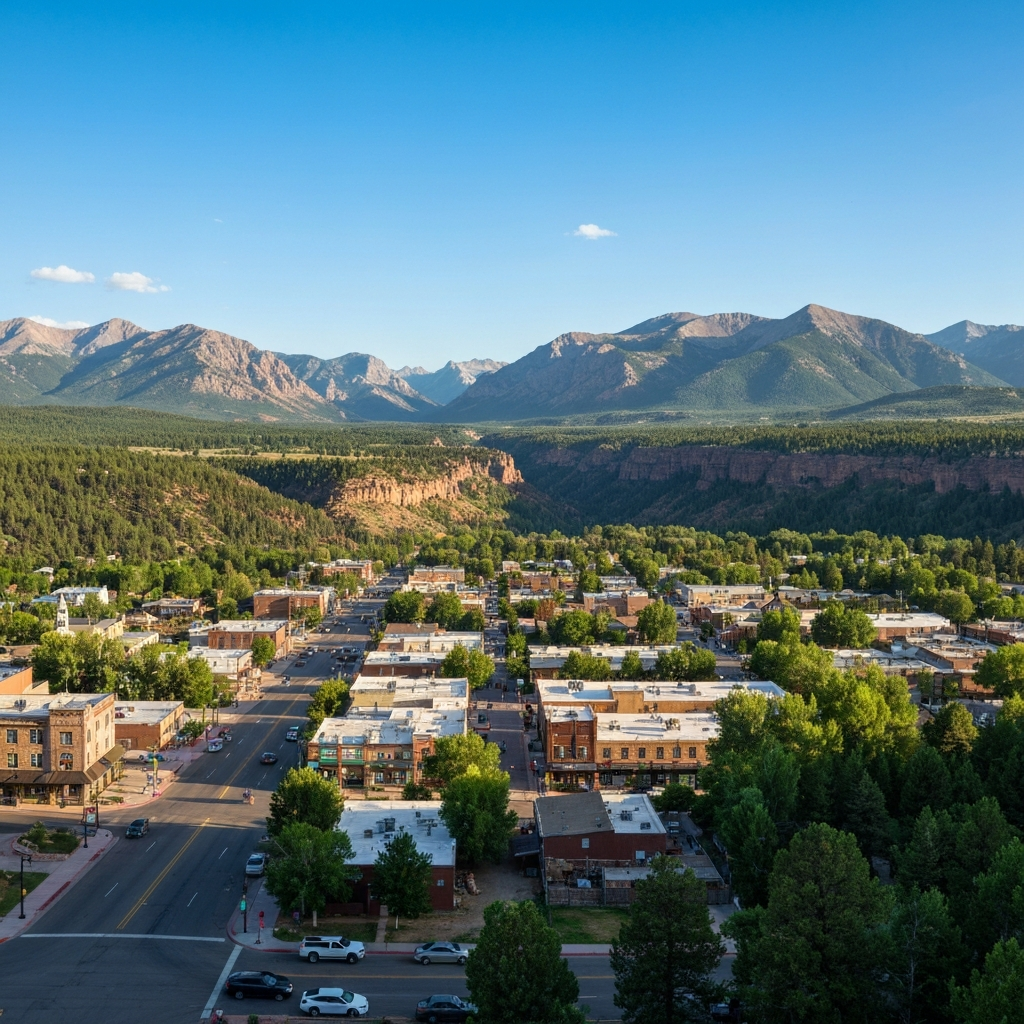
Del Norte, Colorado, nestled at an elevation of approximately 7,884 feet, offers a climate that is both unique and influential on the daily lives of its residents. Understanding these patterns is essential for agriculture, outdoor activities, and community planning.
Climate Overview
Del Norte experiences a cold semi-arid climate, characterized by low annual precipitation and significant temperature fluctuations between day and night. The town receives an average annual precipitation of about 10.29 inches, with the wettest month typically being July, averaging 3.86 inches of rainfall. In contrast, November is often the driest month, with an average of 0.63 inches of precipitation.
Seasonal Variations
Winter
Winters in Del Norte are cold, with average low temperatures in January around 3.7°F and average highs reaching 33.1°F. Snowfall is common, contributing to the town’s picturesque winter landscape.
Spring
Spring brings a gradual warming trend, with average highs in April reaching 57.3°F. This season is also known for gusty winds and occasional snowstorms, making it a transitional period for the local environment.
Summer
Summers are mild, with average high temperatures in July around 79.3°F. The town experiences summer monsoons beginning in July and continuing through September, characterized by sunny mornings followed by afternoon storms.
Autumn
Autumn sees a cooling trend, with average highs in October around 61.1°F. This season is marked by a decrease in precipitation and the vibrant changing colors of local foliage.
Environmental Considerations
The unique climate of Del Norte influences local agriculture, water resource management, and outdoor recreational activities. Residents and visitors alike benefit from understanding these patterns to make informed decisions throughout the year.
By staying attuned to Del Norte’s climate and seasonal changes, the community can better appreciate and adapt to the natural rhythms that define this beautiful region.